Recognition
A clearer view of cumulative stress and the warning signs responders often normalize.
The job teaches first responders to protect everyone else. It rarely teaches them what to do with the weight they carry home—or how to ask for help before survival mode becomes a crisis.
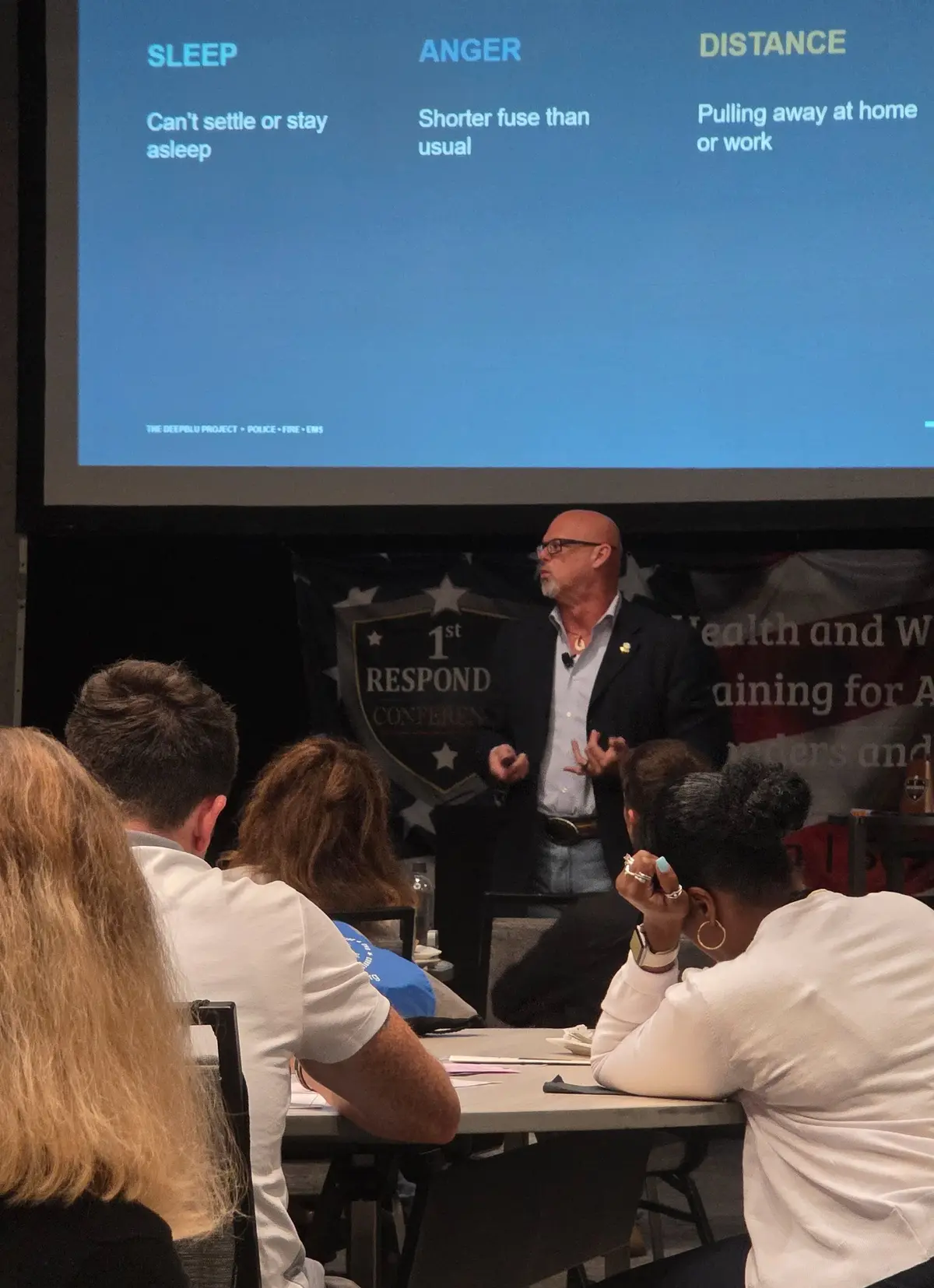
Christopher connects his own path from command leadership, silence, and suicidal thoughts to support and recovery with the culture that teaches responders to keep carrying everything alone.
A clearer view of cumulative stress and the warning signs responders often normalize.
A direct challenge to the belief that asking for help is weakness or professional failure.
Usable words for beginning a conversation with themselves, a peer, a family member, or a professional.
Law enforcement, fire service, EMS, emergency communications, corrections, public-safety leaders, peer-support teams, and first-responder families.
Conference keynote, opening or closing general session, agency training day, wellness event, leadership summit, or moderated conversation.
Send the date, location, audience, attendance, format, and what you need the room to understand or do differently afterward.